
Standing in faith is harder when the enemy is loud. He rarely starts with a circumstance. He starts with words—intimidation, fear, a worst-case diagnosis, a relentless whisper that something is wrong. He knows what words can do. He was there when God spoke the world into existence, and he watched what happened every time God opened His mouth. Words build realities. So, the enemy goes after yours first!
David understood this better than anyone. His story in 1 Samuel 17 is not a children’s fairy tale. It is a masterclass in what it looks like to stand firm when the voice of the enemy is the loudest thing in the room.
The Enemy’s First Weapon Is Always Words
Goliath was not primarily a military threat. He was a trash talker. Day after day for forty days, he stood between the two armies and hurled words at Israel—intimidation, contempt, curses, mockery. The army of Israel listened. They absorbed every word. Layer upon layer of fear built up in their hearts until, by the time David arrived, they were already defeated before a single sword had been raised.
This is exactly how the enemy works against us. The attack rarely begins with the circumstance—it begins with the suggestion. The dread that arrives before the diagnosis. The whisper of defeat before the battle has even started. Hebrews 11:3 tells us the world was framed by the Word of God. Words are instruments of creation, and the enemy knows it.
When David arrived at the battlefront, he heard the same words that had paralyzed an entire trained army. But those words landed differently in him. His response was not fear, but outrage. “Who is this uncircumcised Philistine, that he should defy the armies of the living God?” (1 Samuel 17:26). Same enemy. Same words. Completely opposite result.
The difference was not David’s size, training, or military experience. It was his frame of reference. The soldiers measured Goliath’s words against themselves. David measured them against the Lord of hosts. The words didn’t change, but the standard against which they were weighed changed everything.
Three Sources of David’s Confidence
David’s confidence didn’t come from arrogance or naivety. It came from three very specific sources, and each one is available to us today.
First, his relationship with God. David didn’t just know about God — he knew Him. He had spent years alone in the fields, in conversation with the Lord, writing songs, watching God protect him in obscurity. That relationship produced a knowing that no giant could shake. Intimacy with God is the bedrock of standing in faith when everything around you is shouting the opposite.
Second, his track record with victory. David told King Saul plainly: “The Lord who delivered me out of the paw of the lion and the paw of the bear, He will deliver me out of the hand of this Philistine” (1 Samuel 17:37, MEV). He wasn’t guessing. He was extrapolating from a proven pattern. God had been faithful before. Goliath was simply the next item on a list of things God had already proven He could handle.
Third, his clarity of outcome. Before David threw a single stone, he had already declared the end of the battle. He told Goliath he was going to cut off his head with his own sword, before he had any sword in his hand. He could see the victory on the inside before anything changed on the outside. That is not wishful thinking. That is a God-given picture of the end, so real it shapes your declaration before the battle even begins.
Standing in Faith Means You Have an Advantage David Didn’t
Before we follow David to the battle line, we need to pause on something that changes the whole picture. David was an Old Testament saint. The Spirit of God came upon him for specific moments and assignments—extraordinary, but temporary. The Holy Spirit didn’t remain with people permanently in David’s day. That was a different dispensation.
We are New Testament believers. We carry something greater. Jesus promised: “He will give you another Helper, that He may abide with you forever” (John 14:16). The same Spirit who raised Jesus Christ from the dead lives permanently inside every born-again believer (Romans 8:11). We are His temple (1 Corinthians 6:19).
David ran at Goliath with an extraordinary anointing. We carry a permanent indwelling. If David could run at his giant with what he had, consider what we carry into ours. Standing in faith for us is not an act of willpower—it is a declaration of who lives on the inside.
Declare It Before You See It
When Goliath addressed David directly—cursing him, mocking him, promising to feed his flesh to the birds—David was not moved. The enemy’s words simply didn’t carry the same weight the Word of God carried. And his response is one of the great declarations of Scripture:
You come to me with a sword, a spear, and a shield, but I come to you in the name of the Lord of hosts, the God of the armies of Israel, whom you have reviled.
Then David declared: “This day will the Lord deliver you into my hand” (1 Samuel 17:46, MEV). This day. Not eventually. Not someday. Today. Present-tense confidence in a present-tense God. When you know the victory is already secured, you don’t speak in vague futures. You speak in present declarations.
David carried five stones into that battle—one for Goliath, and four for Goliath’s descendants (2 Samuel 21:15-22). Before he picked up a single stone, he had already seen beyond this battle. He knew there was more victory on the other side. Don’t let the symptom or circumstance in front of you consume your entire field of vision. There is life beyond this fight, and it is worth declaring.
Your confession is a declaration of your expectation. Your voice is the delivery system of your manifestation. David’s greatest weapon was not the sling or the stone. It was his voice. The declarations he made before the battle were just as important as the stone he threw during it. Standing in faith is not passive waiting—it is active, spoken, declared confidence in what God has already said.
Your Turn to Speak
The enemy works hard to keep you silent. If he can get you quiet—quiet under symptoms, quiet in prayer, passive in your declarations—he has already achieved half his goal. He knows that the moment you find your voice and open your mouth with the Word of God, his grip on your situation begins to break.
So here is the question David’s story asks every one of us: what victory do you see? Whatever it is, say it out loud. “I see myself well. I see strength coming back. I see this marriage restored. I see provision replacing lack.” Declare your victory because victory is released through your words!
The weapon the enemy sent against David became the instrument of his victory. The very sword meant for David’s destruction took off Goliath’s head. What the enemy has used against you can become the testimony of your breakthrough. Don’t negotiate. Don’t go quiet. Keep the Word before your eyes and open your mouth in the name of the Lord of hosts.
Not today, devil. Actually—not any day!
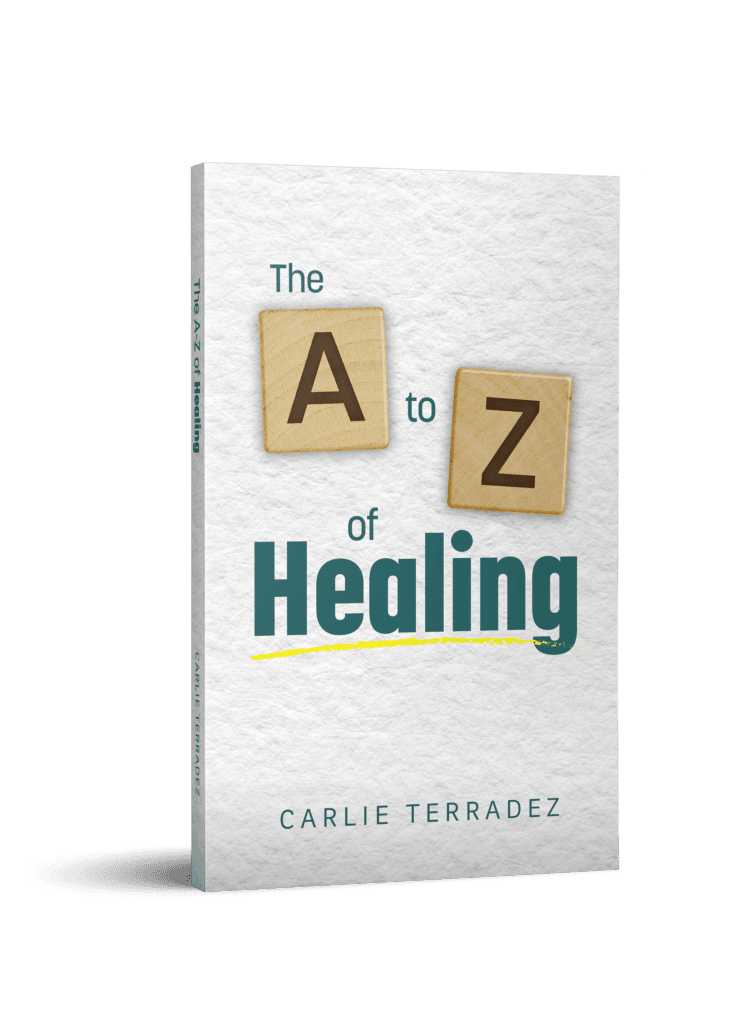
This article has been adapted from the chapter titled Not Today, Devil! in Carlie Terradez’ new book The A to Z of Healing.
26 Simple Truths to Receive and Walk in Your Healing
In The A to Z of Healing, Carlie Terradez takes you on a clear, Scripture-based journey through 26 foundational truths—one for each letter of the alphabet—designed to help you understand, receive, and walk in the healing Jesus already provided at the cross.
Whether you’re just beginning to explore what the Bible says about healing or you’ve been standing on God’s promises for years, The A to Z of Healing will help you build a strong, practical foundation—one letter, one truth, one step at a time!
Receive a Free Exclusive Bookmark when you order today!